
Module 1 · Unit 1 · 10 minutes
The full narrated video will be added here. The complete transcript is available below.
When people talk about climate change, they often focus on electricity, transport, or industry.
But there is another sector that is just as important and often overlooked: heating.
Heating homes, offices, schools, hospitals, and industries requires enormous amounts of energy every single day. In fact, heating and cooling account for almost half of Europe’s total final energy consumption. Today, roughly 75 percent of this heat is still produced using fossil fuels such as natural gas, coal, and oil.
That means every time a boiler burns fuel, carbon dioxide is released into the atmosphere.
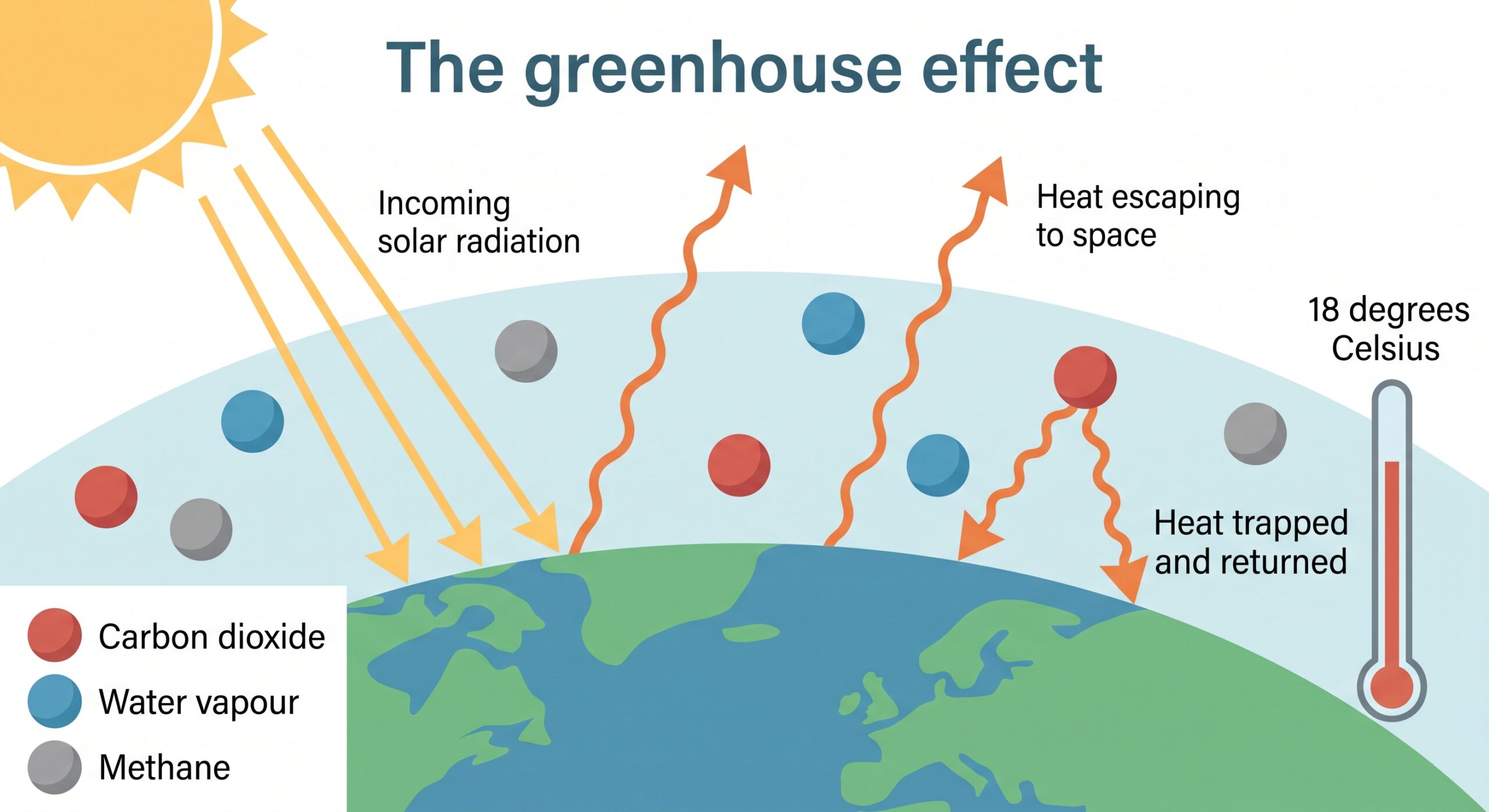
These emissions strengthen the greenhouse effect. Normally, greenhouse gases as for example carbon dioxide, water vapor or methane, help keep Earth warm enough for life with a global average temperature of plus 18 degrees Celsius.
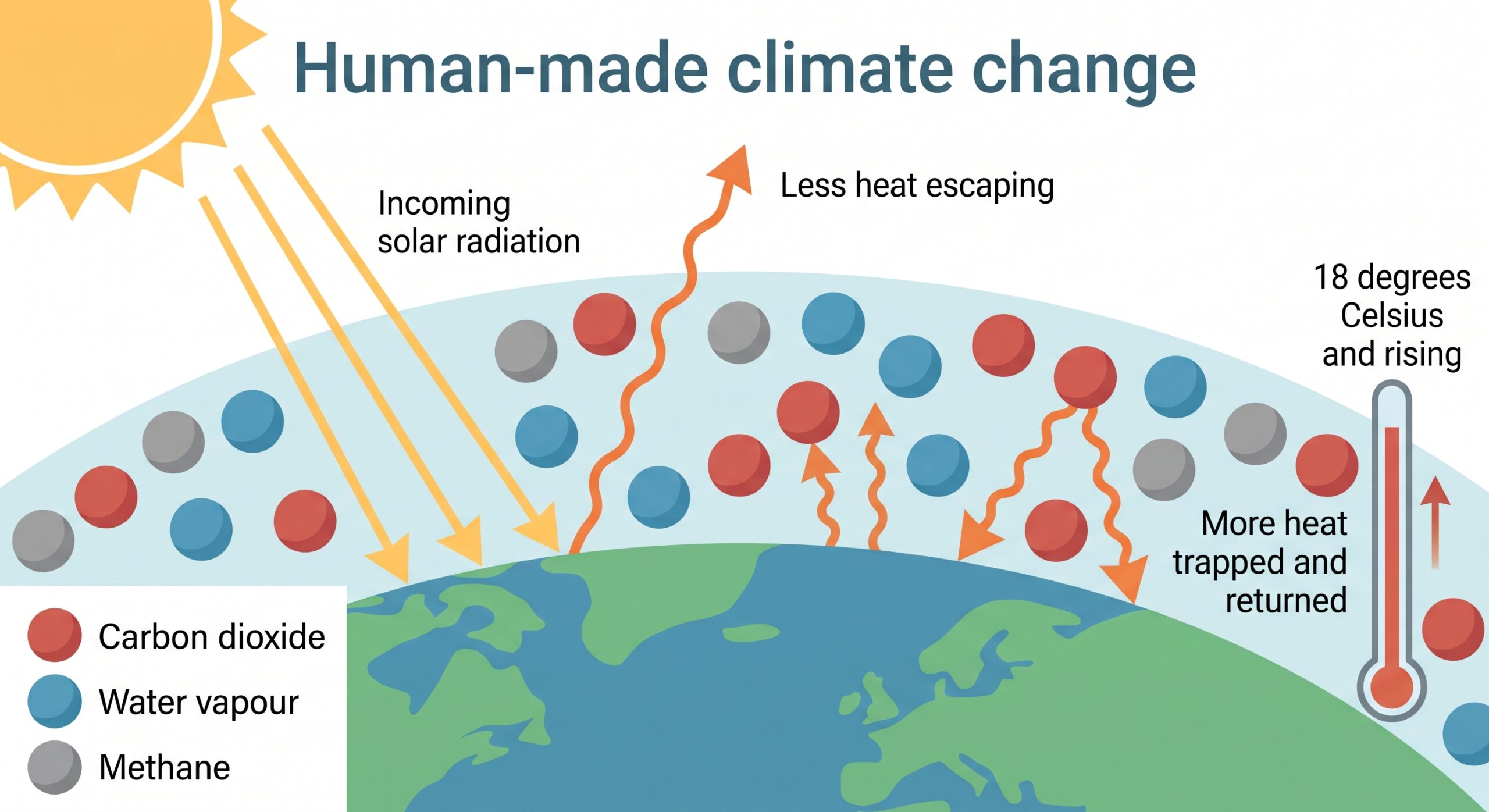
But because humans are releasing too much greenhouse gases the atmosphere traps more heat than it should. As a result, global average temperature and sea level rise, weather becomes more extreme, and ecosystems are increasingly under pressure.
This is why every sector must decarbonize, including heating. This transformation is known as the Decarbonised Heating and Cooling Transition. The Decarbonised Heating and Cooling Transition describes the shift from fossil-based heating systems toward independent, low-carbon, and energy-efficient heating solutions. It is not only about replacing one technology with another. It is about redesigning how heat is produced, distributed, stored, and used.
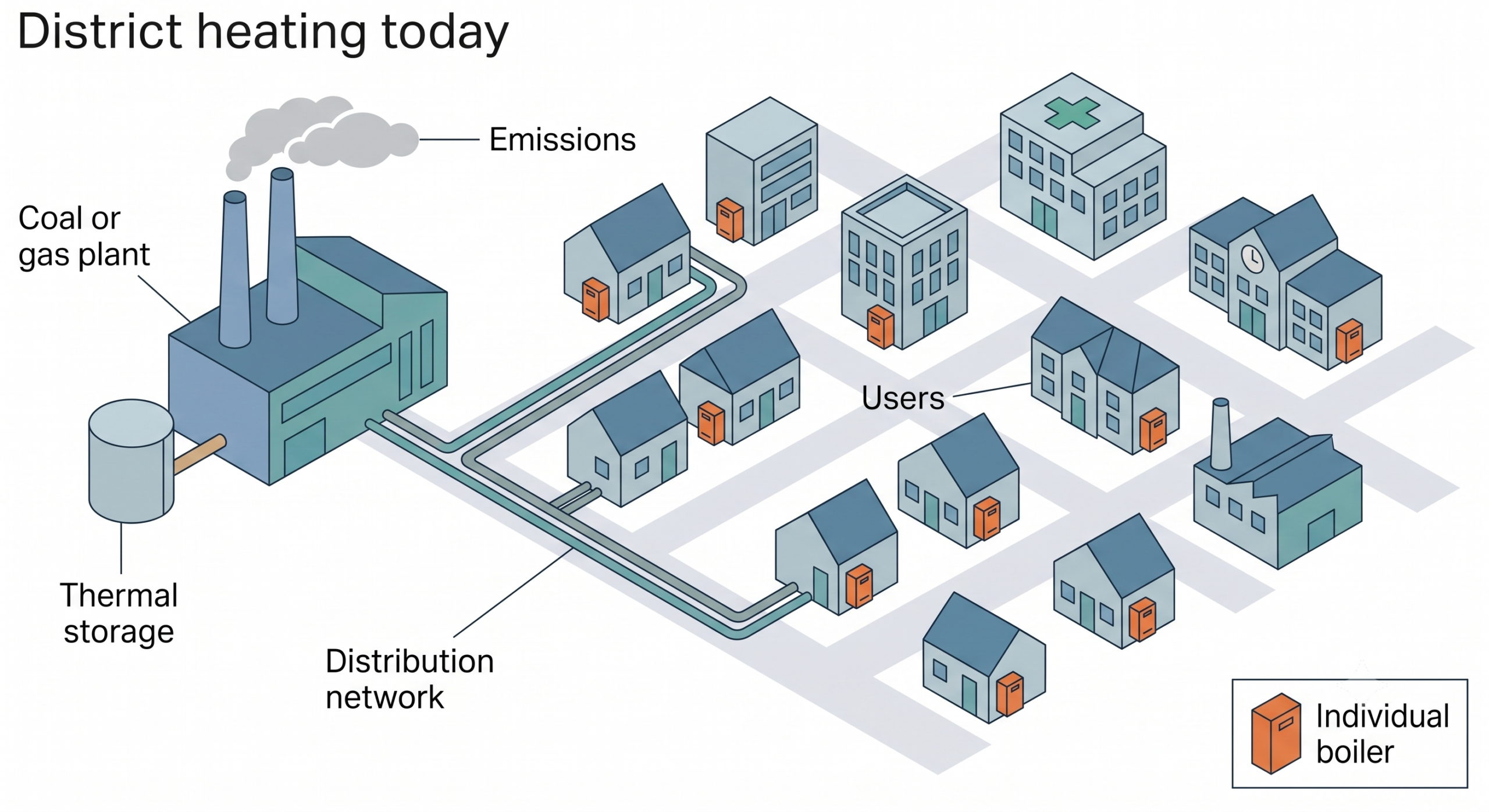
Traditional heating today is based mainly on individual decentralized systems such as gas and oil boilers, while some areas also rely on centralized district heating networks that often operate at very high temperatures. District heating networks distribute thermal energy from centralized sources to multiple buildings through underground pipes. Today, these systems waste large amounts of energy and rely heavily on fossil fuels.
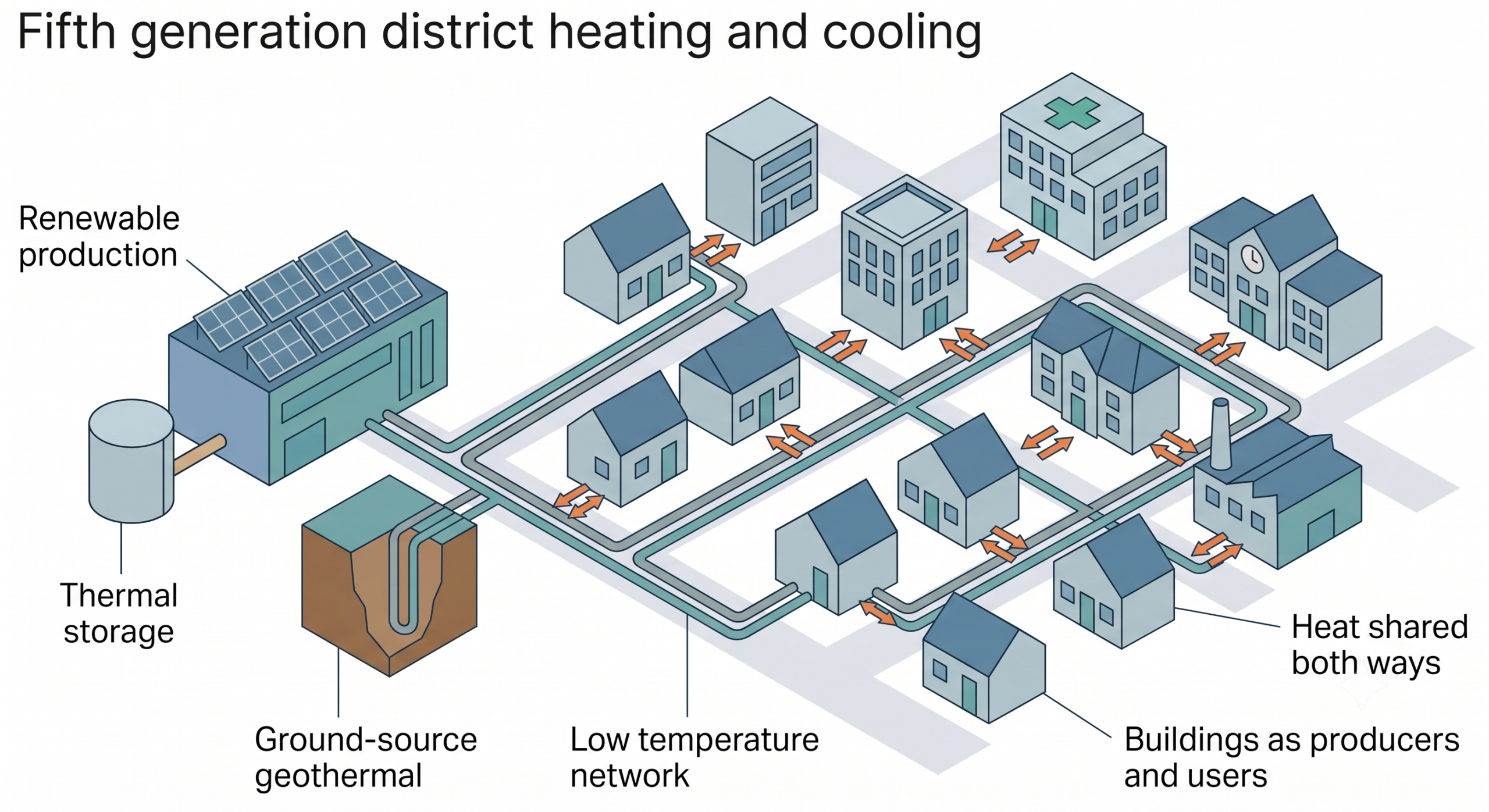
Today, energy experts are working toward what is called fifth-generation district heating and cooling networks. These next-generation systems operate very differently. Instead of distributing extremely hot water through large pipes, they use much lower temperatures and rely on renewable energy, heat pumps, waste heat recovery, and thermal storage. The major advantage of fifth-generation district heating and cooling networks is that they can provide both heating and cooling through the same infrastructure. One building’s excess heat can become another building’s energy source.
Because the networks operate at low temperatures, buildings can efficiently remove excess heat and transfer it back into the system for use elsewhere. This makes cooling more energy-efficient and allows waste heat to become a valuable energy resource. This creates a more flexible, energy-efficient and decarbonized energy system.
A key part of the Decarbonised Heating and Cooling Transition is Electrification. As electricity systems become increasingly powered by renewable energy such as wind and solar, heating systems can also become cleaner by switching from fossil fuels to electricity-based technologies.
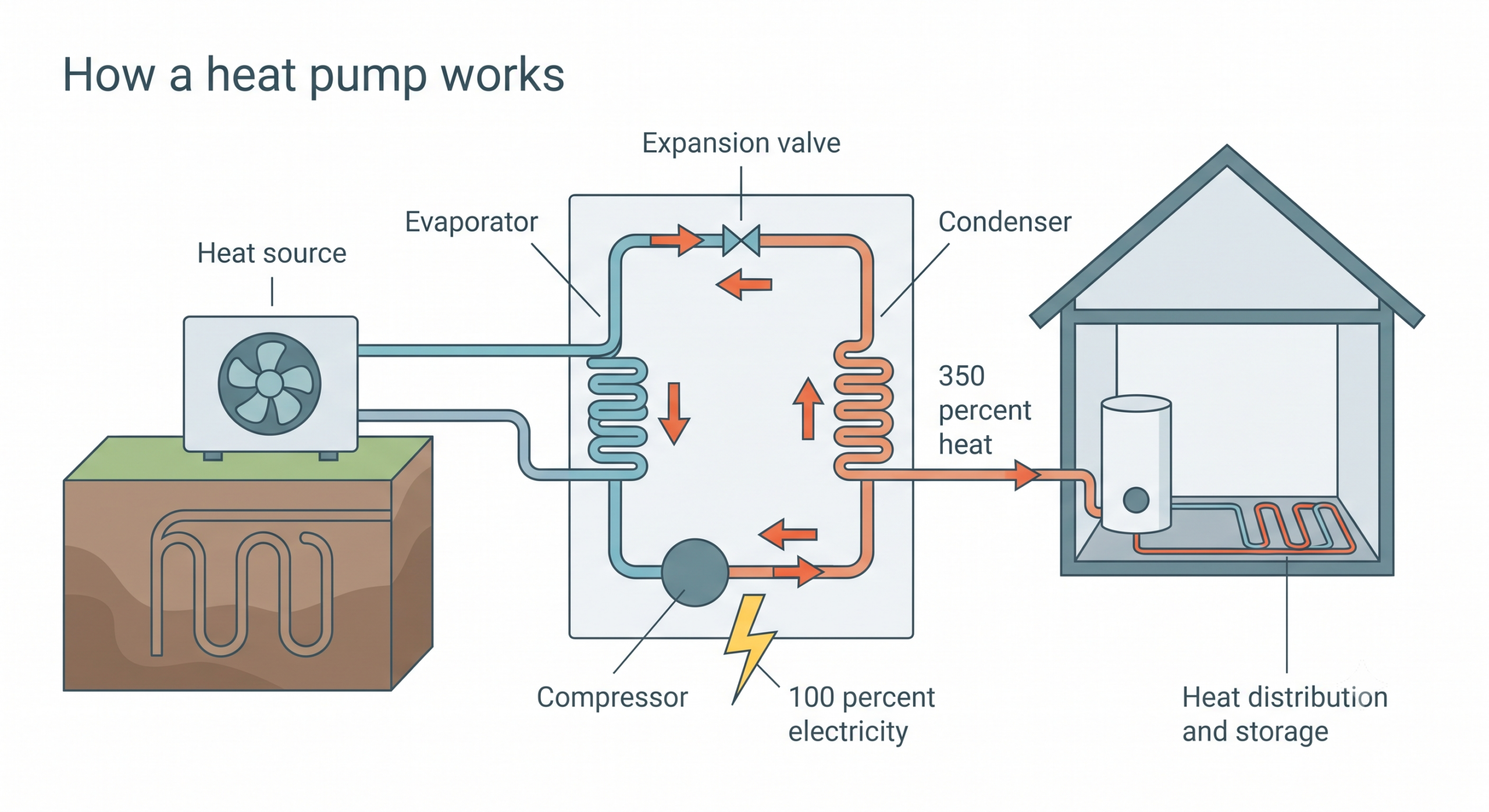
One of the most important technologies here is the heat pump. Unlike a conventional boiler that creates heat by burning fuel, a heat pump moves existing heat from the environment into a building. This process is extremely efficient because 100 percent of electricity can produce around 350 percent of usable heat. Energy conversion from electricity to heat can become even more efficient, and therefore less costly, because lower heating temperatures require less electricity. This is why improving insulation, modernizing radiators, and lowering the operating temperatures of heating networks are becoming increasingly important.
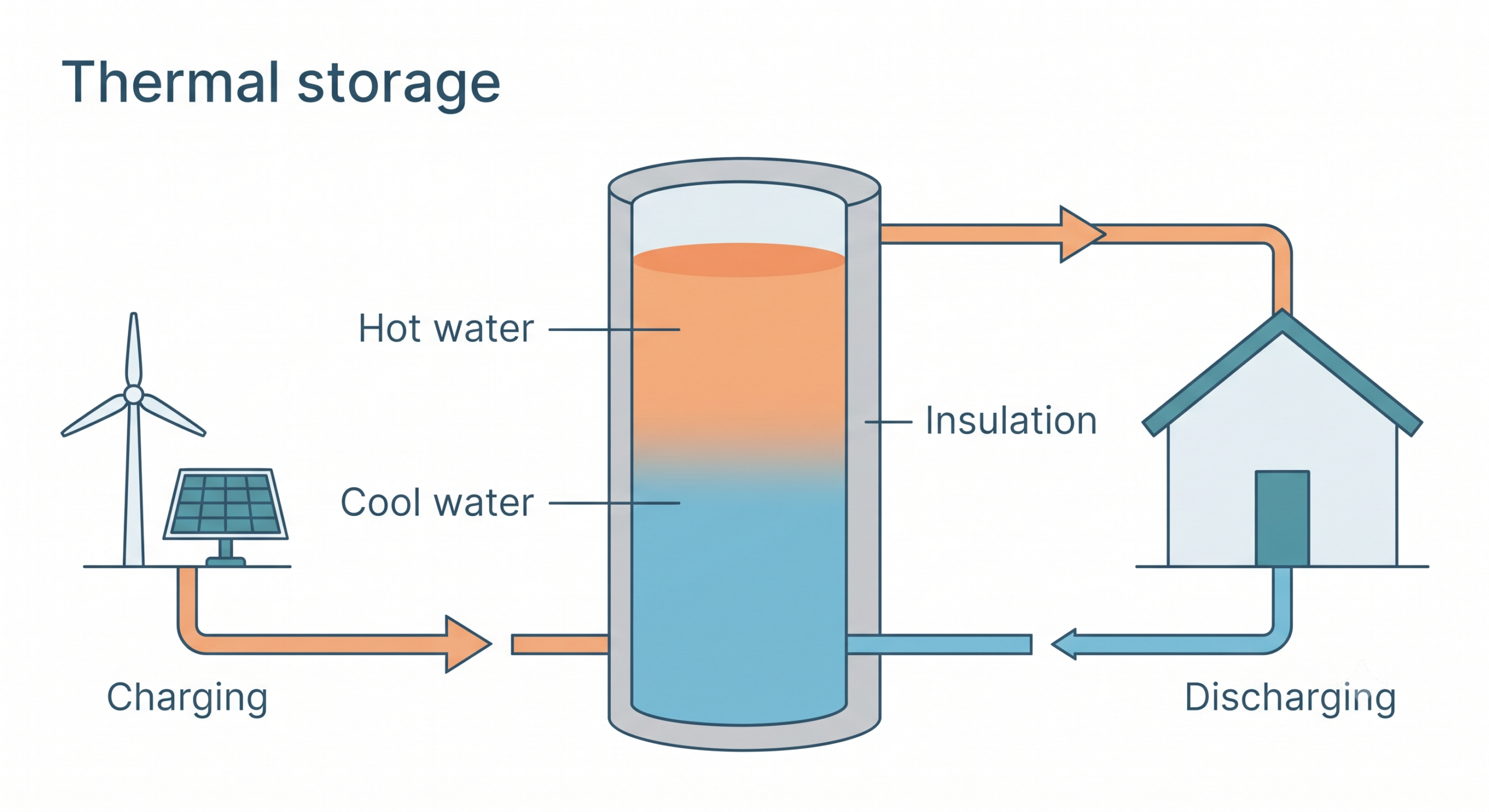
Through electrification the heating sector becomes connected to the electricity sector. This connection creates opportunities for flexibility. For example, buildings can heat water decentralized or thermal energy can be stored in centralized thermal storages when renewable electricity is abundant and cheap, then use that stored heat later when electricity demand is higher.
This interaction between sectors is known as sector coupling. Sector coupling is becoming increasingly important because renewable electricity production is naturally variable. The sun does not always shine, and the wind does not always blow. By linking heating systems with electricity networks, energy can be used more intelligently and balanced over time. In this way, heating systems can actually help stabilize future energy grids.
But what does the Decarbonised Heating and Cooling Transition actually mean in practice for buildings and organizations? For building owners, this may mean improving insulation, replacing fossil-fuel boilers with low-carbon heating systems, connecting to district heating networks where available, or installing an individual heat pump in less densely populated areas. It can also mean installing home smart energy management systems. In many European countries, grants are available and should be explored before implementation, as they can help reduce costs.
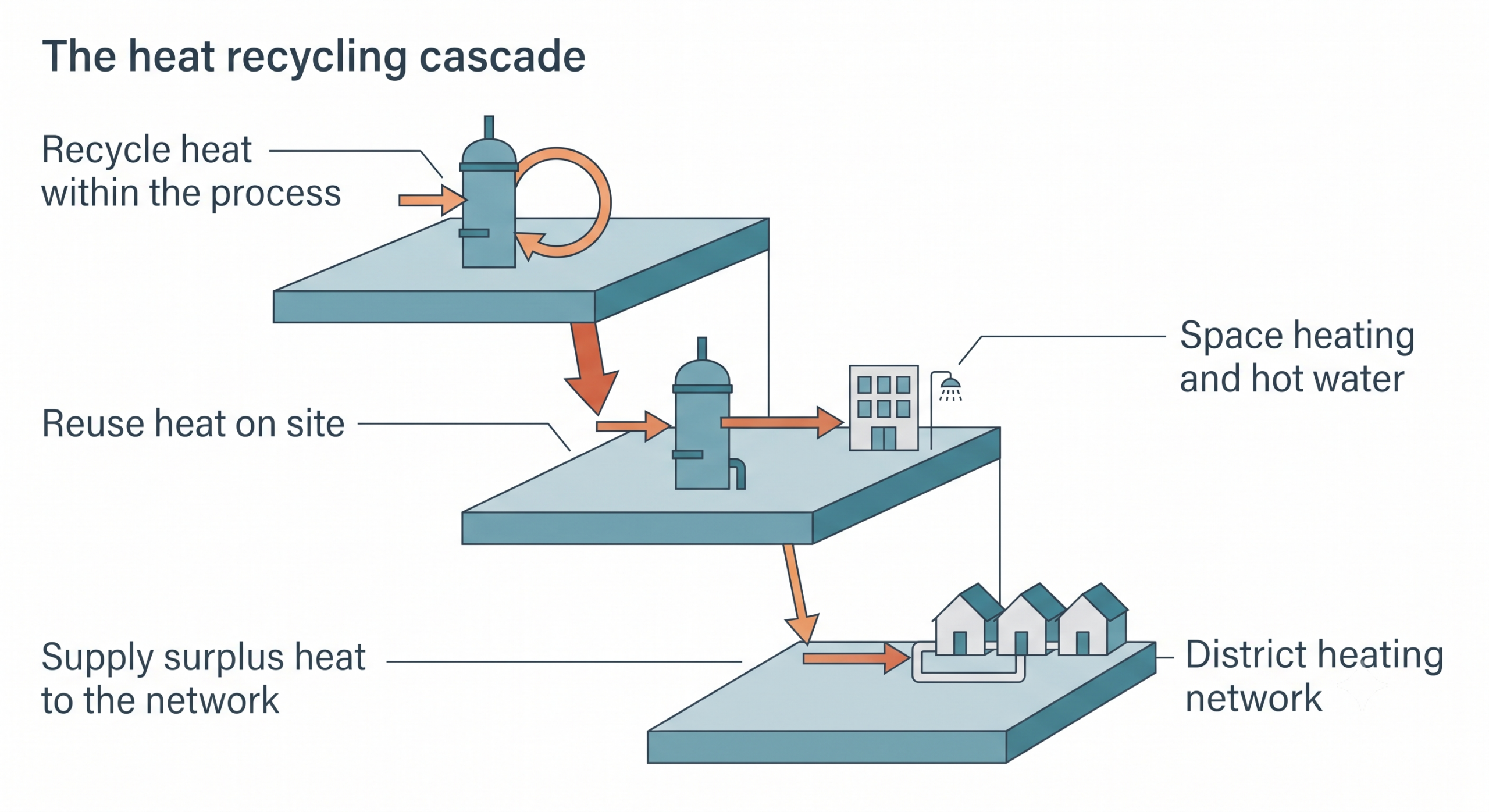
For companies and public organizations, heat should ideally be used in a three-step cascade. The first step is direct internal heat recycling within industrial processes. The second step is to use recycled heat internally for other purposes, such as supporting additional processes, space heating, or hot water supply. Together, these first two steps can significantly reduce a company’s overall energy demand and carbon dioxide emissions. The third and final step is to make surplus heat available for external use through a district heating and cooling network. In this way, excess heat can be supplied to other buildings or users and may even become a source of revenue.
While these three steps are being implemented, the remaining energy demand should be shifted from fossil fuels to renewable sources. The choice of heating technology depends largely on the required process temperatures: for low-temperature processes up to 80 degrees Celsius, heat pumps are often suitable. For temperatures up to around 120 degrees Celsius, high-temperature heat pumps can be used and for even higher temperatures, electrical boilers become an important option.
In some cases, climate-neutral hydrogen can be a solution. However, it is important to remember that climate-neutral hydrogen has a much lower efficiency compared to heat pumps and even electric boilers. While electric boilers can convert electricity into heat with efficiencies of up to 100 percent, hydrogen boilers typically achieve efficiencies of only around 60 percent.
Of course, the Decarbonised Heating and Cooling Transition is not without challenges. Infrastructure investments, policy changes, and workforce training all require time and resources. However, the benefits are substantial: lower emissions through decarbonized heat, highly efficient energy systems, greater flexibility through electrification and a shared primary energy source, and renewable multi-source district heating and cooling networks. The Decarbonised Heating and Cooling Transition is therefore much more than a technical upgrade. It is a fundamental transformation of how society produces, distributes, stores, and uses energy.