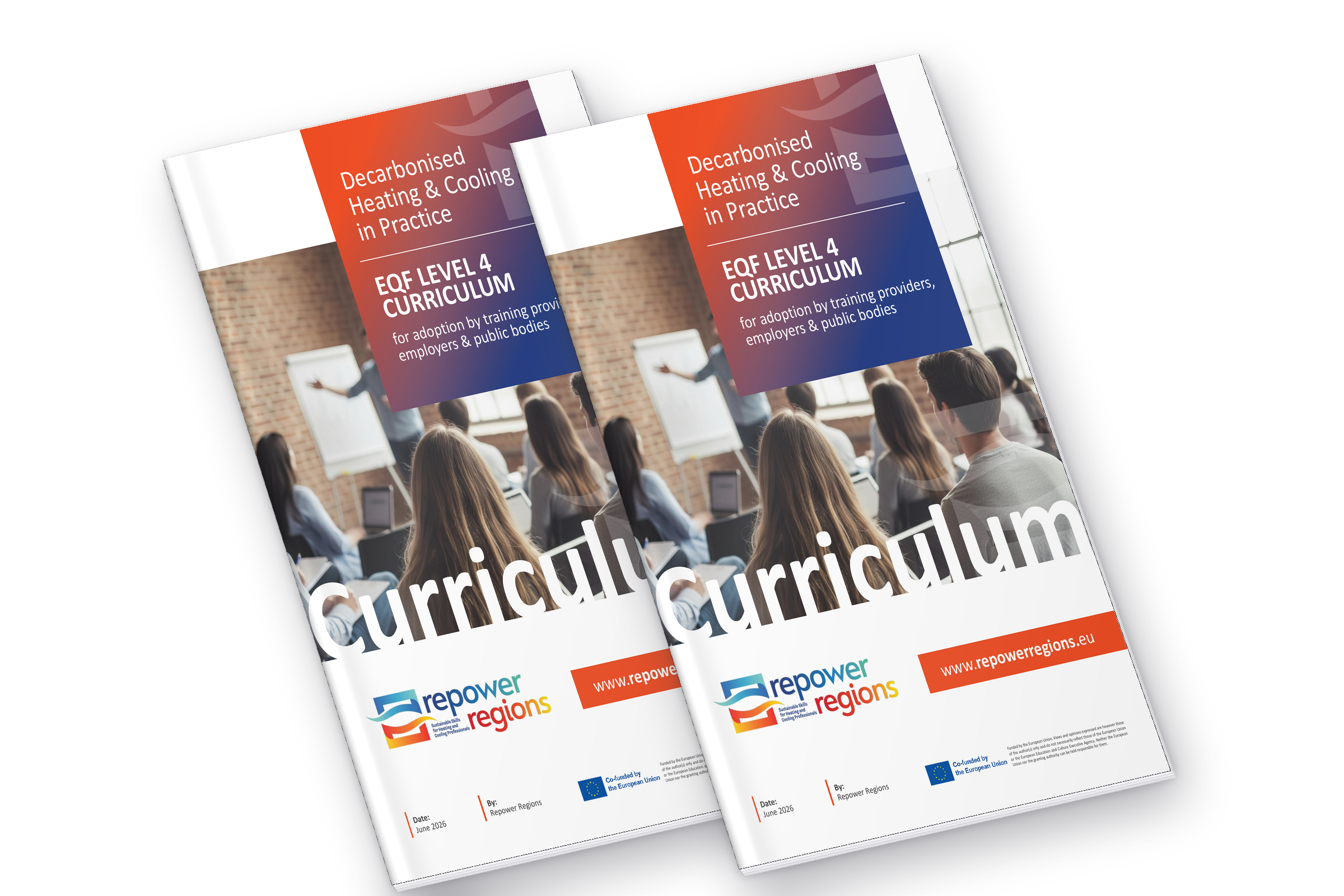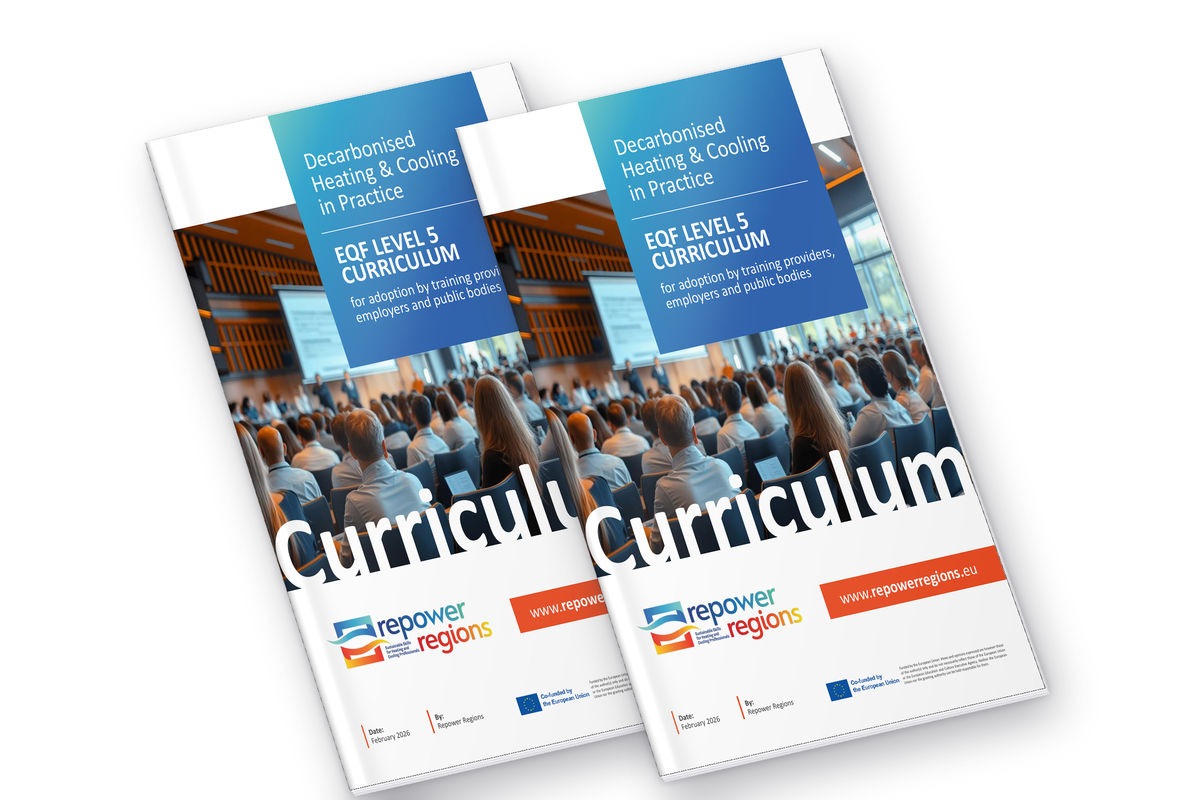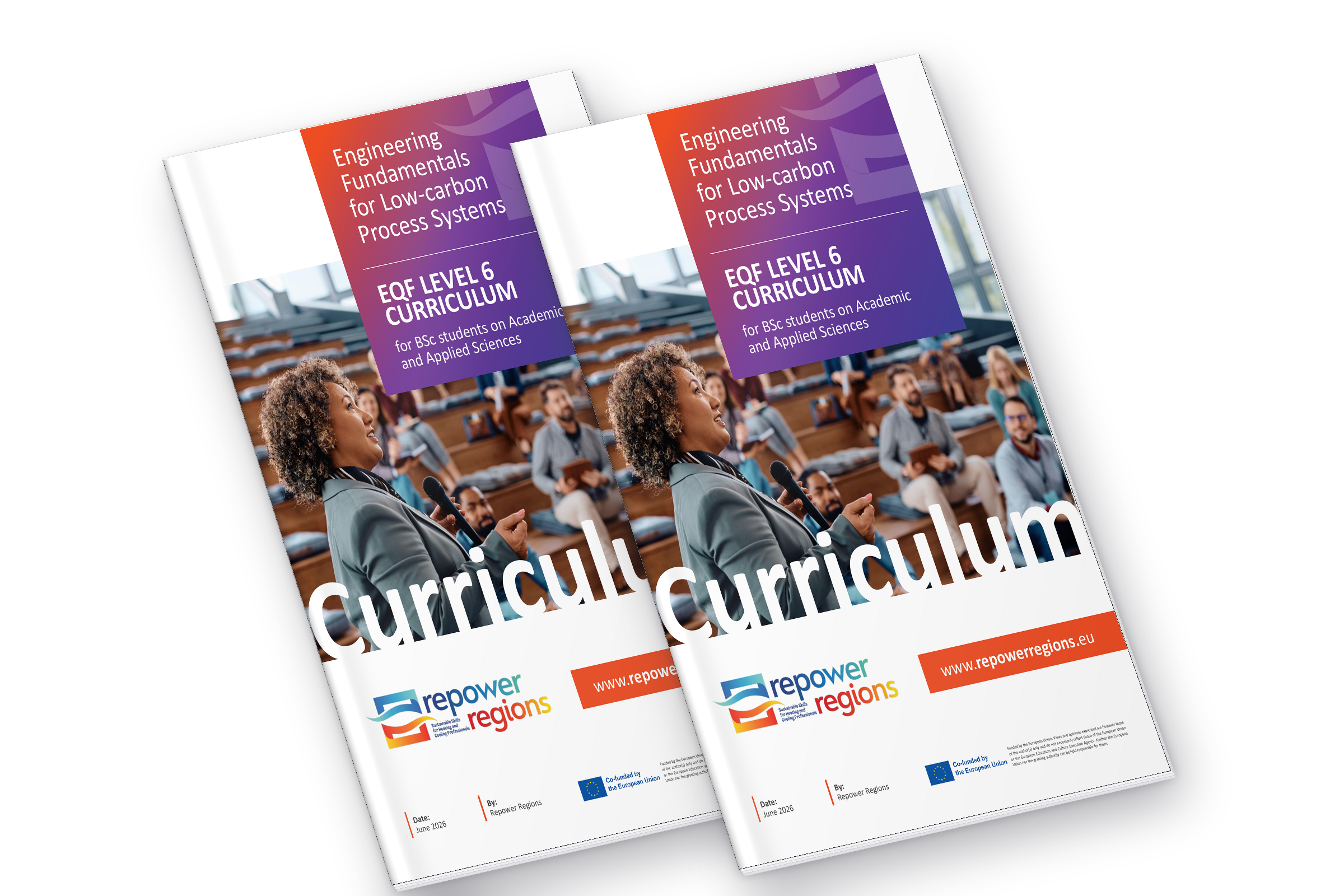






Three ready-to-adopt curricula for HE, VET and C-VET, built to prepare Europe's current and future workforce for the clean heat transition.
Transforming how we heat and cool our buildings needs people with the right skills at every level, from technicians on site to the engineers designing tomorrow's systems. As part of our commitment to develop a set of open curricula for green-digital skills, REPOWER REGIONS has created three curricula aligned to the European Qualifications Framework (EQF).
Each curriculum is free to adopt. Training providers, employers, universities and public bodies can use them as they are or adapt them to their regional context.




Download the curriculum that fits your learners, explore the module catalogue, and adapt the examples to your local context.
For the people who install, operate and maintain the systems.
This practical CPD programme helps technicians and operational staff work confidently on low-carbon heating and cooling projects. Learners practise following established procedures, using checklists and templates, reading basic performance data, and recognising when an issue should go to a supervisor or specialist.
Ideal for: HVAC and installation technicians, site technicians and assistant site supervisors, building services and retrofit technicians, maintenance and energy support technicians, and small contractor teams.
Entry: A basic vocational qualification in HVAC, building services or construction, or around 1–3 years of practical experience.
Learners complete: Seven practical outputs that reflect real workplace documentation, such as commissioning and handover checklists, an integration record, a method statement and a task tracker update.
For the people who plan, oversee and coordinate the work.
This programme covers the same seven competence areas as Level 4, from the perspective of those who lead delivery. Learners interpret project information, weigh up options and trade-offs, verify commissioning evidence, and keep information flowing between trades, clients and stakeholders.
Ideal for: HVAC project and site managers, senior technicians and systems supervisors, building services managers, retrofit coordinators, energy and sustainability officers, technical sales and client advisors, and SME owners.
Entry: A relevant vocational qualification, or 1–3 years' experience in HVAC, building services, construction delivery, retrofit coordination, energy management or technical advisory.
Learners complete: A portfolio of decision-ready documents, including a transition impact note, a retrofit action note, a commissioning evidence pack, a performance summary and a stakeholder update with an issue and risk log.
For the engineers, architects and energy specialists of the future.
This one-semester undergraduate course (15 weeks, 6 ECTS) connects thermodynamics, fluid mechanics and heat transfer to the design, sizing and optimisation of high-efficiency heating and cooling systems. Students also work with energy management to ISO 50001, EU legislation including the EPBD and EED, and the financial and environmental analysis (LCC, NPV, IRR and LCA) that shows whether a project is viable.
Ideal for: Final-year BSc students in mechanical, electrical and civil engineering, architecture, environmental science and energy management, at both academic and applied-sciences institutions. It can be built into an existing programme or run as a standalone specialisation.
Modules: Engineering Fundamentals · Technology and Equipment Selection · System Design and Energy Calculations · Operation, Control and Optimisation · Energy Management Systems and Key Legislation · Project and Synthesis
Capstone project: Students develop a Deep Retrofit Case Study in groups. This is a full proposal covering technical design, financial and environmental analysis, regulatory alignment and an energy management plan, which they present to a stakeholder audience.