




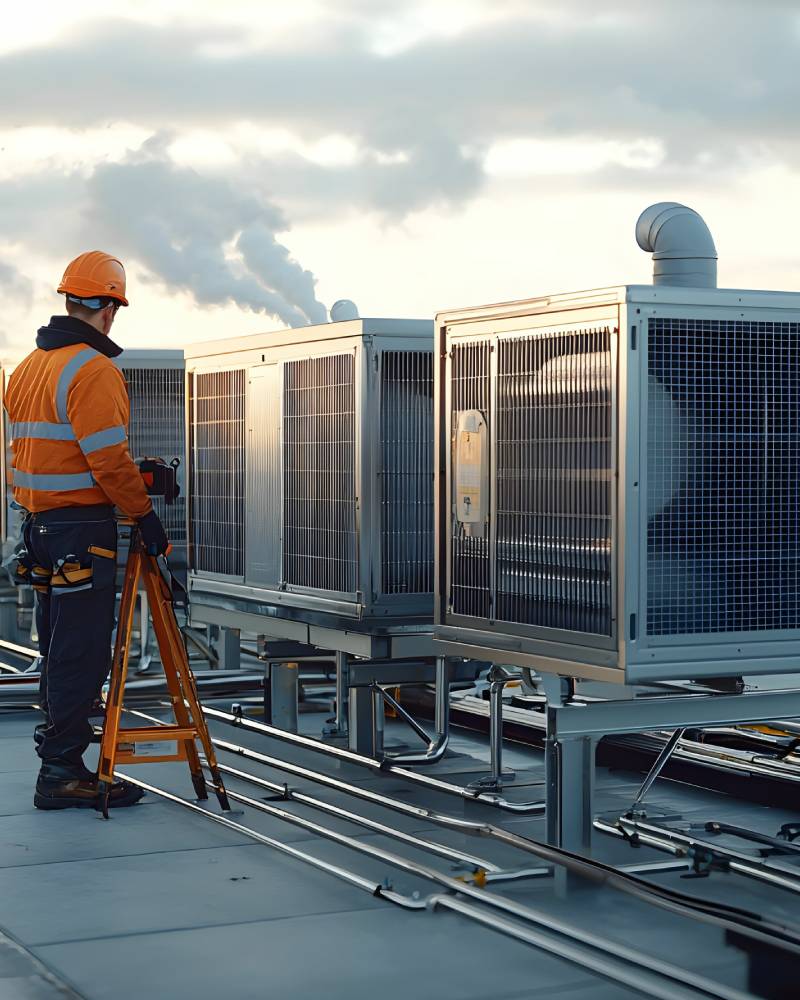


The REPOWER REGIONS Landscape Analysis Report (D2.2) provides a detailed overview of heating and cooling decarbonisation across REPOWER REGIONS partner countries (Czechia, Denmark, Germany, Ireland, Latvia, Norway, Poland, Serbia, and Spain). It explains how EU policy drivers (including the EPBD, EED, and RED III) are shaping a new framework for cleaner thermal energy systems, and what this means for technology choices, local planning, and skills development.
The analysis combines desk research with fieldwork (including consultations and surveys) and evidence from 68 case studies across commercial/industrial buildings, public buildings, residential buildings, and district-level energy systems. It also reviews the education landscape, analysing 110 study programmes/courses across higher education, VET, and CVET, to identify what learners are currently gaining—and what is missing.
Overall, the report finds a clear shift towards electrification, energy recovery, low-temperature systems, and digital optimisation (including smarter controls and data-driven operation). At the same time, it flags persistent implementation barriers and skills gaps, and provides practical recommendations for policymakers, municipalities, industry, education providers, and research actors.